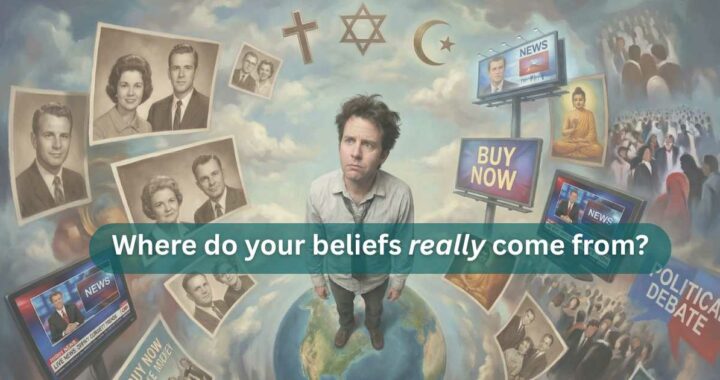
Where do your beliefs really come from? Do you know?
What questions do you ask yourself on a regular basis? Is it the every day questions that are routine, like, “What’s for dinner?” or “I wonder what’s on the TV tonight?” Or are you one of the few people who are interested in something deeper, like, “What am I here for?” or “What’s my purpose in life?”
Or even moving on from that, do you ever question where your beliefs came from in the first place?
If so, you’re already beginning a process that many people never consciously start.
Most of us like to think of ourselves as independent thinkers.
We make our own choices. We have our own opinions. We decide what we like, what we value, and how we want to live.
But how often do we really stop and ask why we think the way we do?
- Why do you prefer Diet Coke to Pepsi, or Pepsi to Diet Coke?
- Why do you believe success looks a certain way?
- Why do some paths feel “sensible” and others feel unrealistic?
- Why do you feel comfortable with some ideas, and instantly resistant to others?
We usually assume these preferences and beliefs are simply us.
But what if many of them were shaped long before we ever consciously chose them?
This article isn’t here to tell you what to believe.
It’s here to invite you to pause, look a little more closely, and begin asking better questions.
Because awareness always begins with curiosity. And that’s what brought you here, isn’t it?
The invisible influences shaping everyday life
From the moment we’re born, we are immersed in a world of messages.
Some come from parents and caregivers, often lovingly passed down as guidance about how life works, or more accurately, how they believe life works.
Some come from teachers and education systems, shaping what is considered important, valuable or ‘normal, or again, what the current society promotes as important, valuable or ‘normal’.
Some come from culture, religion, social expectations and unspoken rules, or again… you get the idea?
And a great many come from media – advertising, news, films, social platforms, and the stories repeated so often they begin to feel like truth. But the real question is, whose truth?
None of this is necessarily malicious.
Most conditioning is not imposed with ill intent. In fact, much of it is well-meaning.
The issue isn’t that conditioning exists.
It’s that it often goes unnoticed and unchecked.
When something is repeated often enough, especially in childhood, it stops feeling like an idea and starts feeling like reality.
And what we accept as reality quietly shapes our lives.
The myth of the completely conscious choice
We tend to believe that our preferences are rational and freely chosen.
But let’s take something deliberately ordinary and pose a few questions:
- Why do you prefer one brand over another?
- Why do certain products feel familiar, trustworthy or “right”?
- Is it because you truly know that they are or is something else at play?
- Why do you associate certain colours, sounds or words with comfort, quality or success?
Advertising has known for decades that repetition, association and emotional cues influence behaviour far more than logic. Familiarity breeds comfort. Comfort feels like choice.
The same is true beyond consumer habits.
- Why do some careers feel respectable while others feel risky?
- Who told you that they were?
- Why does rest sometimes feel undeserved?
- Why do certain lifestyles feel admirable and others feel “less than”?
We like to think we arrived at these conclusions consciously.
But very often, they arrived quietly first – and were accepted without question.
Beliefs don’t need to be dramatic to be powerful.
In fact, the most influential ones are usually the least obvious.

How unexamined beliefs quietly shape a life
Beliefs act like lenses. We rarely notice them, but we see everything through them.
They shape:
- What we believe is possible for us
- What we think we deserve
- What feels realistic or unrealistic
- What we fear attempting
- How we judge ourselves when we fall short
A belief such as “People like me don’t do that” can quietly close doors before they’re even noticed.
A belief like “This is just how life is” can keep us repeating patterns that no longer serve us.
None of this makes us weak or naïve.
It makes us human.
But it does raise an important question:
How much of your life is being lived by conscious choice, and how much by inherited assumption?

When beliefs begin to feel uncomfortable
For many people, the first sign that beliefs are worth questioning is discomfort.
You may reach goals that don’t bring the satisfaction you expected.
You may feel out of step with expectations placed upon you.
You may experience a quiet sense that something doesn’t quite fit, even though everything looks “fine” on the surface.
Often, this discomfort is labelled by our internal egoic voice as failure, ingratitude or restlessness.
But what if it’s something else?
What if it’s awareness beginning to surface?
Discomfort doesn’t always mean something is wrong.
Sometimes it means something different is ready to be seen.
Perhaps you are awakening to something new.
From passive acceptance to questioning
This is one of the most important shifts a person can make.
Passive acceptance tends to maintain the status quo.
It keeps familiar systems, stories and patterns in place, even when they no longer support growth or well-being.
Questioning, on the other hand, creates movement.
When you begin to ask why you think the way you do, you move from autopilot into awareness. You stop being a passive receiver of ideas and become an active participant in your own thinking.
- This doesn’t mean rejecting everything you were taught
- It doesn’t mean criticising parents, teachers or society
- It doesn’t mean believing the world is broken or out to deceive you
- It simply means recognising that evolution – personal or collective – does not come from unquestioned repetition
- It comes from a more conscious choice
When individuals begin to question with curiosity rather than hostility, something larger begins to shift too. Personal evolution and collective evolution are not separate processes. One feeds the other.
Growth begins the moment awareness replaces autopilot.
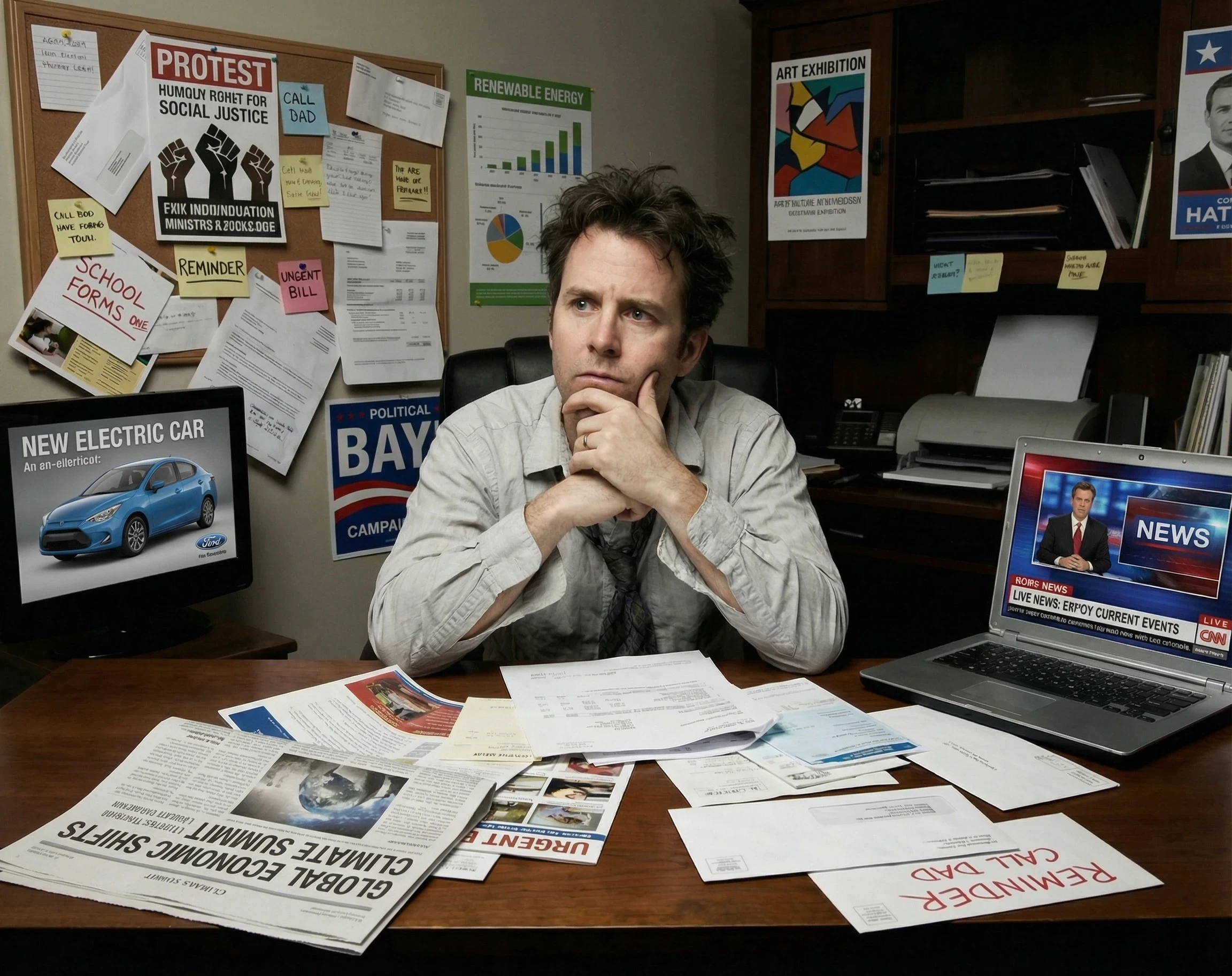 Do you know where your beliefs really come from?
Questioning is not rebellion
For many people, questioning feels risky.
It can feel like disloyalty.
Like rejection.
Like stepping outside what is safe or acceptable.
But questioning is not rebellion.
It is maturity.
You can honour where a belief came from and still decide whether it belongs with you now.
You can respect your past without letting it dictate your future.
You can appreciate what once served you, and still choose something different.
Questioning is not about having better answers.
It’s about being willing to look.
The power of better questions
We are taught to value answers. To be certain. To know.
But answers tend to close inquiry, while questions open it.
Better questions don’t demand immediate conclusions.
They create space.
You might begin with questions like:
- Where did this belief come from?
- Is this something I’ve examined, or simply inherited?
- How does this belief make me feel in my body?
- Who would I be without this assumption?
- Does this belief expand my life, or quietly limit it?
You don’t need to replace old beliefs with new ones yet.
You don’t need to decide what is “true”.
And you don’t need to start believing every conspiracy theory there is – unless you choose to.
You just need to notice.
A gentle practice of noticing
This is not about adding more to your to-do list.
There’s no homework here. No technique to master.
Simply begin to notice:
- The thoughts you repeat without questioning
- The assumptions you defend automatically
- The phrases that signal closure, such as “that’s just how it is”
Awareness doesn’t require force.
It requires honesty.
And honesty, approached gently, can be deeply freeing.
The beginning of a different way of living
You don’t need answers yet.
You don’t need new beliefs.
You don’t need to know where this path leads.
You only need curiosity.
Questioning isn’t about dismantling your life.
It’s about understanding it.
And understanding is always the first step towards choice.
This is where the journey begins.
Related posts
Who am I? The first and most important question of all?
Where do we come from? A deep dive into our spiritual origins